Ultimate Concrete Curing Time Guide For Indian Home
The curing of concrete is sometimes ignored in constructions, but it is by far the most important parameter for determining its longevity. Although it is important to have a good cement and a properly designed reinforcement structure, the curing time is the ultimate parameter which decides whether you will live in a strong house for many years or not. The following information explains the concrete curing time needed for different constructions in India.
Indian standard practice (IS 456:2000) generally recommends a minimum 7 days for OPC concrete and up to 10 days for concrete with mineral admixtures/blended cement (PPC, PSC), extending to 10-14 days in hot or dry weather.
Why Curing is Critical for Cement Strength
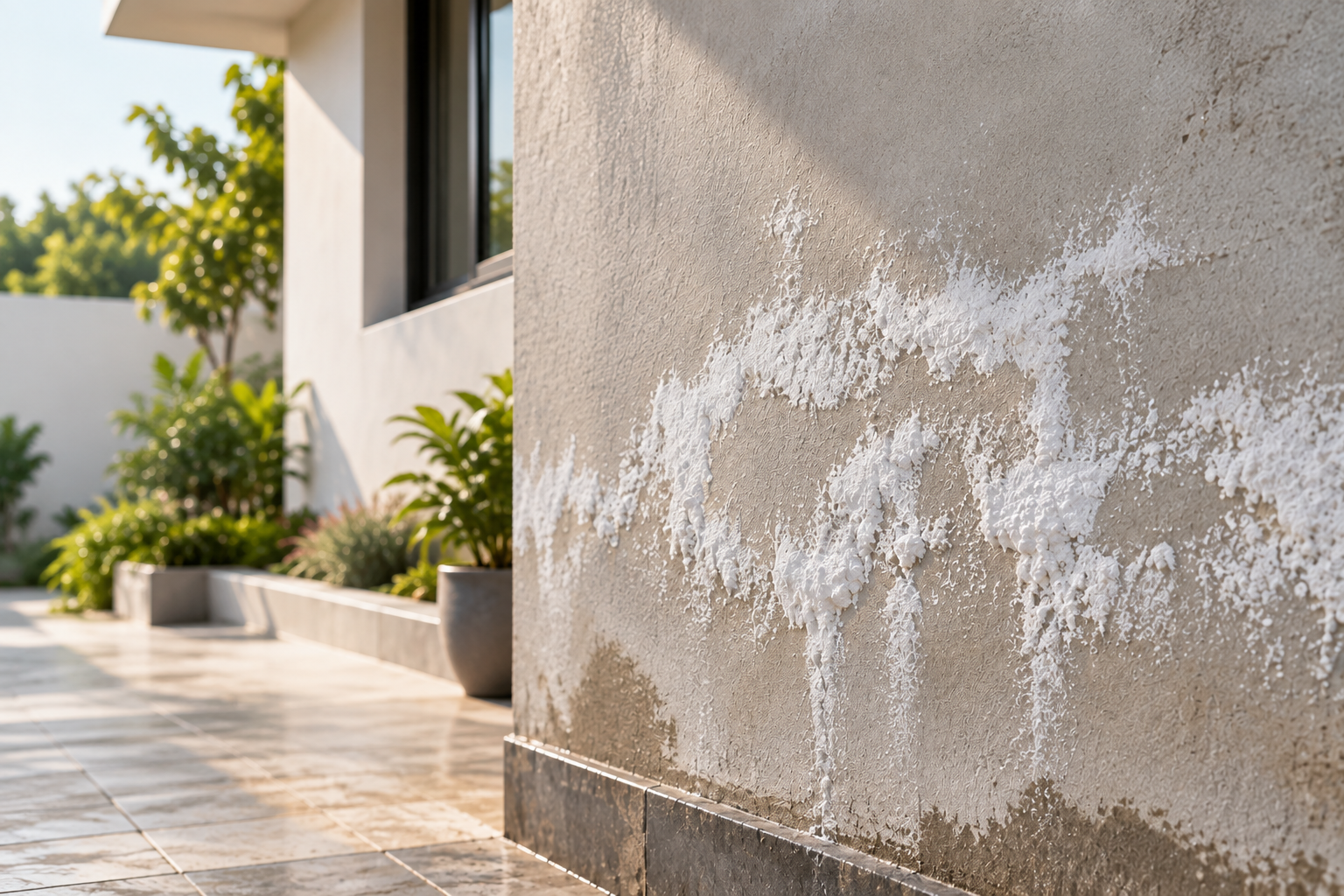
The whole process of curing of the concrete is actually the hydration process which is the chemical reaction of the cement with the water. In case of inadequate curing, the process of hydration is incomplete and therefore the concrete becomes brittle and porous.
Advantages of curing are:
Development of strength: Concrete acquires 70% of its required strength within the first 7 days but this is possible only in case of constant curing.
Prevention of cracks: Proper curing avoids the formation of cracks because of proper moisture.
Durability: Properly cured concrete has resistance to weathering action and corrosion of the embedded steel.
In simple words, curing cannot be ignored at all.
Required Curing Days for Different Structural Elements
Different components of a house demand different curing strategies. Let’s consider the curing timeline for different construction elements:
Roof Slab Curing Timeline
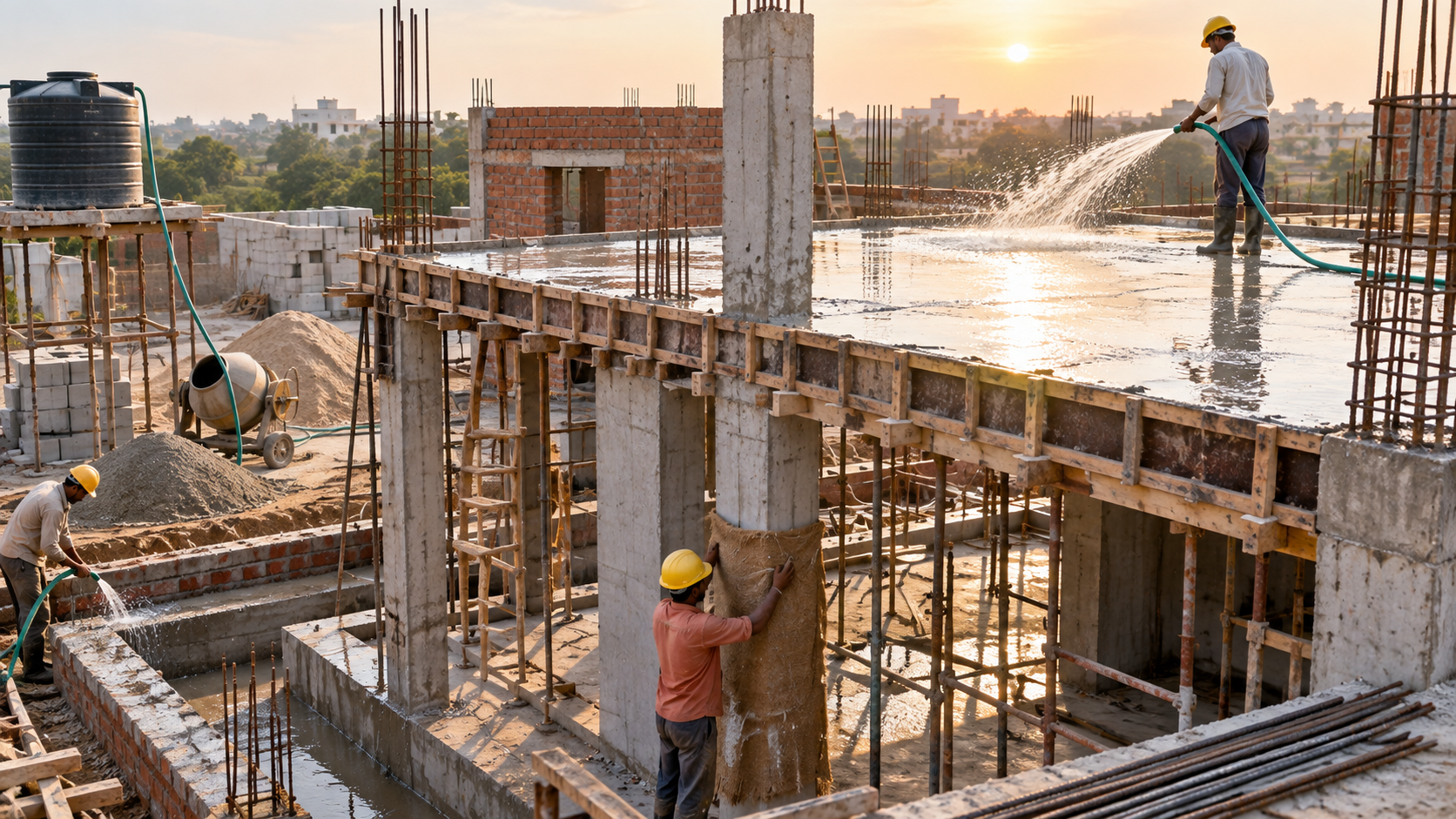
Roof slabs are exposed to sun and wind; therefore, they are likely to lose water at a faster rate. In India, roof slab curing duration must be at least 10-14 days or more depending on the weather and the surrounding environment of the building. The most efficient technique would be ponding, where shallow pools of water are formed on the slab surface.
Safety tip: Polythene sheets could be used to cover slabs during summer seasons.
Column and Beam Curing Duration
Since columns & beams are vertical elements, they dry up faster owing to surface-area-to-volume ratio and exposure. Columns and beams need slightly less than two week’s time for curing. Wrapping them up in wet burlap or hessian and keeping the covering moist is recommended.
Precautionary hint: Do not use direct water jet as this will wash away the surface layer of cement paste.
Wall Curing
Walls usually take a week’s duration or a couple of days more for curing. It is enough to sprinkle water twice a day, but the coverage should be uniform.
Precautionary hint: In brick masonry walls, curing should cover the mortar joints as well.
Foundation Curing
Foundations demand 10–14 days of curing, often achieved by ponding or covering with wet soil. Since foundations are in contact with earth, moisture retention is naturally higher, but continuous monitoring is still essential.
Factors Affecting Curing Time
The following site-specific factors affect the curing time of concrete:
Temperature: In warm climates, evaporation is faster and needs a longer curing time. In cold areas, curing will be a bit shorter but not less than a week.
Mix proportion: Rich mixtures (mixtures with higher amounts of cement) take long to cure.
Wind effect: Buildings that are subjected to high wind need longer curing time due to moisture loss.
Project size: Large projects (such as slabs) produce more heat during curing, and therefore, require a longer curing time.
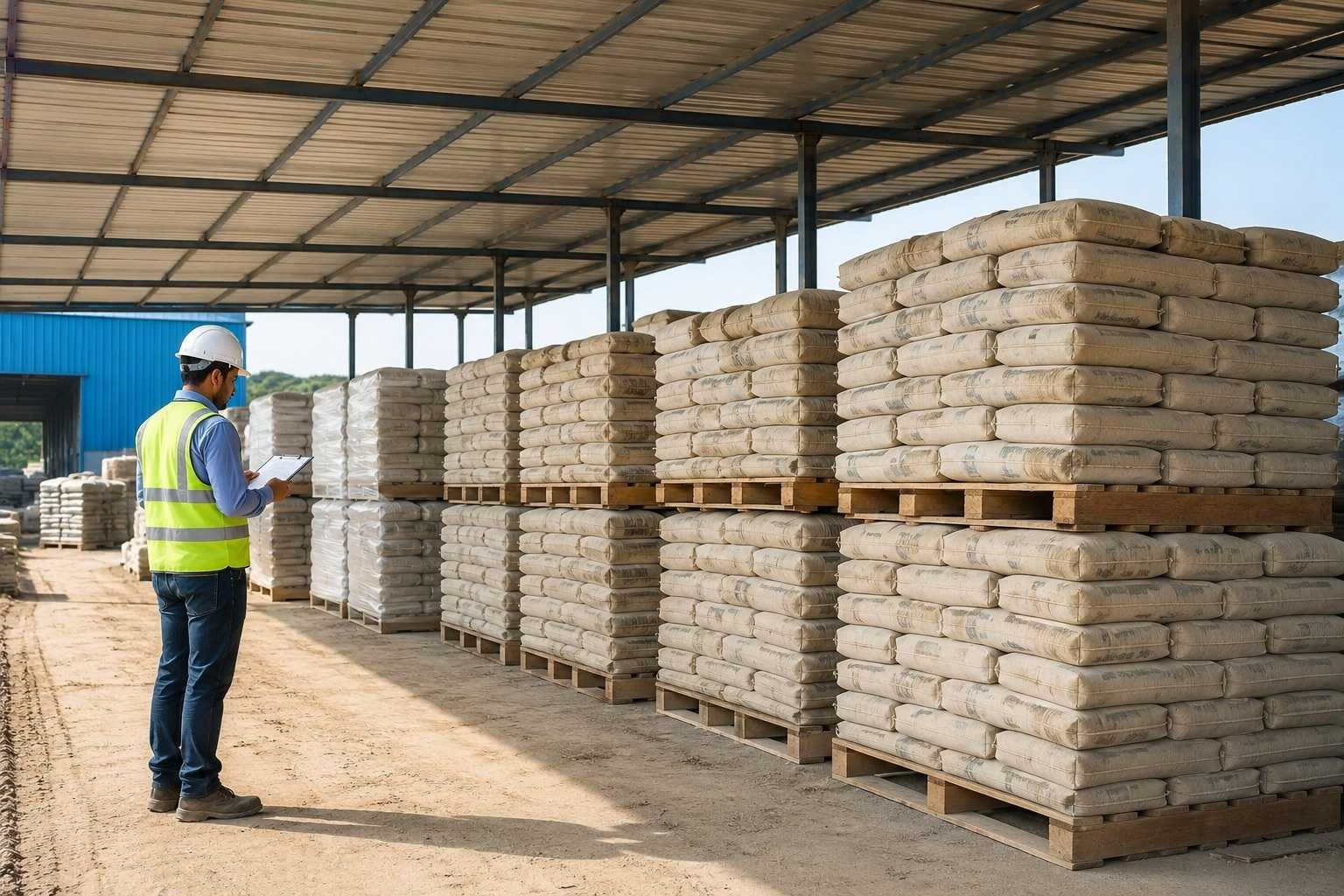
Type of cement: Ordinary Portland Cement takes lesser time to cure than blended cements such as PPC, PSC, and fly-ash based cement, which hydrate more slowly and typically need longer curing time.
Precautionary Parameters for Effective Curing
For ensuring that curing process provides utmost effectiveness, site supervisors should take into consideration the following precautions:·
Maintain constant moisture as any interruptions will hinder the hydration process.
Use only clean water without salts or any other impurities.
Avoid curing practices that allow the concrete surface to dry out during hot, sunny periods.
Make sure there is an equal coverage of all surfaces.
At least 7 days of curing process is mandatory and 14 days for slabs and foundations.
Summary Table: Curing Timelines by Structural Component
Structural Element
Recommended Curing (OPC)
Recommended Curing (PPC/Blended)
Suggested Method
Roof Slab
10–14 days
14 days (up to 21 in hot/dry weather)
Ponding or polythene sheet cover
Columns
7–10 days
10–14 days
Wet burlap wrapping + sprinkling
Beams
7–10 days
10–14 days
Sprinkling or wrapping
Walls
7 days
10 days
Sprinkling, twice-daily
Foundations
10–14 days
14 days
Ponding or wet soil cover
Best Practices for Curing
Wrapping method: Cover columns with wet burlap, hessian cloth, or gunny bags to retain moisture.
Sprinkling: Keep the wrapping continuously damp by sprinkling water at regular intervals.
Avoid direct jets: Do not spray water with force, as it can wash away the cement paste from the surface.
Extended curing in hot climates: In peak summer, extend curing to 10–14 days to counter rapid evaporation.
Uniform coverage: Ensure all sides of the column are cured evenly to prevent differential strength development.
By following these steps, columns achieve their designed compressive strength and resist shrinkage cracks, ensuring structural stability. It is not just a process; it is the vital factor that will either determine whether your building becomes stronger through its design or starts deteriorating early on. Through proper schedules for slabs, columns, walls, and foundations, along with taking some preventive steps, you can make sure that your structure remains resistant to climatic conditions for many years.
Do remember: It is through the curing process that concrete becomes strong, not through mixing. Take curing as the greatest investment in your house’s lifespan.




 Back
Back