Cement Quality Standards in India: IS Codes Every Builder Should Know
Cement Quality Standards in India: IS Codes, Why Cement Quality Standards Matter?
Not all buildings have equal strength because not all structures are constructed using high-quality cement. The importance of adhering to cement quality standards is, therefore, something that Indian construction firms cannot overlook. BIS standards specify the requirements that cement must meet to ensure conformity with the applicable Indian Standard.
Adhering to these codes means ensuring that one does not build structures that may fail due to low strength. Apart from compromised cement quality, ignoring these standards means that the firm is putting its reputation at stake among other things. One cannot build a structure that can stand strong and resist environmental stressors if there are no cement quality standards.
Important IS Codes for Cement in India
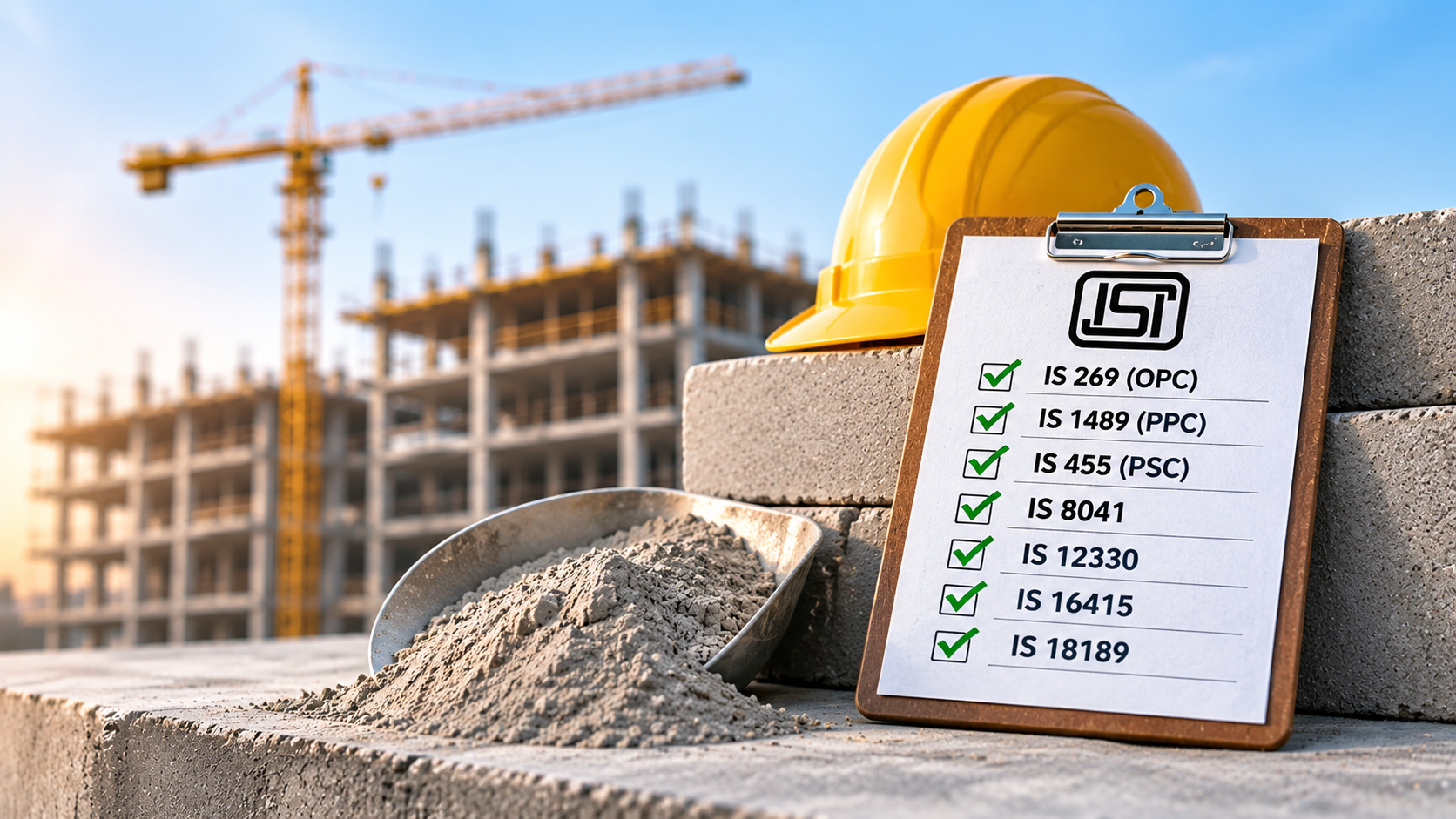
There have been some IS codes formulated by the Bureau of Indian Standards that are concerned with the production, testing, and use of cements. Any builder, regardless of the size of the project, must know about all these IS codes.
IS 269: Ordinary Portland Cement (OPC)
It has set down the standards for OPC which is the most common cement used in India. IS 269:2015 covers OPC in 33, 43 and 53 grades. It replaced the earlier separate standards, IS 8112 (43 grade) and IS 12269 (53 grade).
IS 1489 (Part 1):2015: Fly Ash-Based Portland Pozzolana Cement (PPC)
This standard covers fly ash-based PPC.
IS 1489 (Part 2):2015: Calcined Clay-Based Portland Pozzolana Cement (PPC)
This standard covers calcined clay-based PPC.
IS 455:2015: Portland Slag Cement (PSC)
Granulated blast furnace slag is used in PSC, making it environmentally friendly and highly durable against adverse conditions. The IS 455 ensures that PSC performs consistently in marine constructions, sewage works, and foundations that are subjected to a tough environment.
IS 8041:2026: Rapid Hardening Portland Cement
The code helps create cement that will provide fast-strength gain. It is ideal for construction projects requiring rapid completion.
IS 12330:1988: Sulphate Resisting Cement
In constructions where there is an exposure to high concentrations of sulphates, the code helps to provide standards for sulphate-resisting cement.
IS 16415:2015: Composite Cement
This standard specifies the requirements for composite cement used in construction.
IS 18189:2023: Portland Calcined Clay Limestone Cement
This standard specifies the requirements for Portland calcined clay limestone cement used in construction.
Indian Standards for Cement and Concrete Quality
Other than just the cement, BIS has also specified standards for concrete quality. Cement is just one ingredient in concrete, and it is necessary that it is mixed, cured, and tested correctly to ensure performance. Builders need to adhere to procedures like compressive strength tests, fineness tests, and setting tests to check cement.
Grade certified cement will help ensure that the cement fulfils the IS standards. Builders should check that cement carries the ISI Standard Mark and a valid BIS licence number (CM/L) on the bag.
Quality control in concrete construction requires an emphasis on the following:
Appropriate water to cement ratio
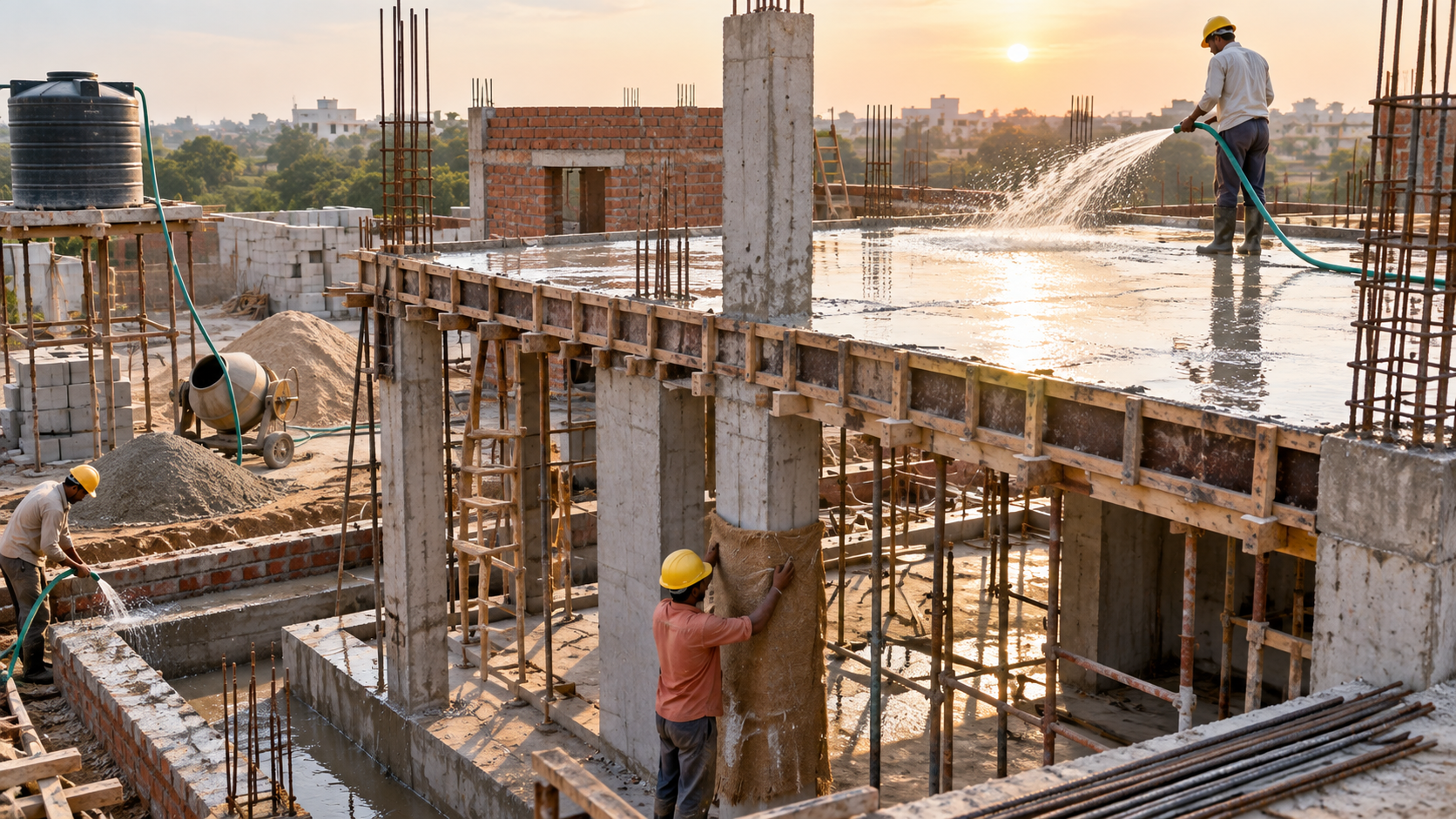
Sufficient curing period
Use of certified cement grades
Testing of compressive strength and durability
Thus, through adherence to these techniques, not only are Indian quality standards met but the structure becomes more durable as well.
Why Must Builders Prioritize BIS Standards for Cement?
Builders tend to try to save money through the use of sub-standard and unregistered cement. But the risks involved are much higher than the temporary gains. Adherence to BIS standards for cement includes:
Protection from law: Using ISI-marked cement is a legal requirement and part of meeting the applicable building code.
Reputation: The buyers like to deal with the builders who are focused on safety and quality.
Sustainability: BIS certification confirms conformity with the applicable product standard; it does not, by itself, establish a cement product’s environmental performance. Learn more about sustainable building practices and certifications.
Non-adherence to IS standards of cement may cause problems of many kinds. But following the standards leads to success.
Building Strong Foundations with IS Codes
Cement is the unseen driving factor that holds everything together. The application of cement quality standards in India and IS codes for cement will not only make sure that the projects done by the builders are compliant but also safe, durable, and sustainable.
Whether it is the cement grade certification or testing of cement quality, every aspect helps in constructing buildings that last long. Builders who follow BIS standards for cement help in making cities safer, infrastructure better, and pave the way for sustainability. Cement quality is not just about compliance; it is about responsibility. Every builder must be aware of IS codes that are meant for the protection of lives and excellence in construction.
At the end of the day, the responsibility of a builder is not just about completing construction projects but rather ensuring that they build structures that people can trust and that last for many generations.
India is still growing and building more cities, so the need for dependable infrastructure will continue to increase. The builders who follow regulations now will be building the future skyscrapers. And in this process, the quality of cement will play an essential role.





 Back