Best Cement for Roof Slab Construction in India: Expert Recommendations
When you stand beneath a roof slab, you’re not just under concrete; you’re under a promise. A promise that stands as a testament to dreams coming true. Roofing is as important as establishing the foundation; this significant moment may be marked by ceremonies signifying safety, permanence, and prosperity. However, there is an interesting point to consider: why do some rooftops stay strong for decades, while others exhibit signs of cracking, moisture, and brittleness even within a few years? It all comes down to your choice of cement. And, the choice of cement during the initial construction phase determines the longevity of your dream structure.
Cement Quality: The Silent Guardian of Roof Slabs
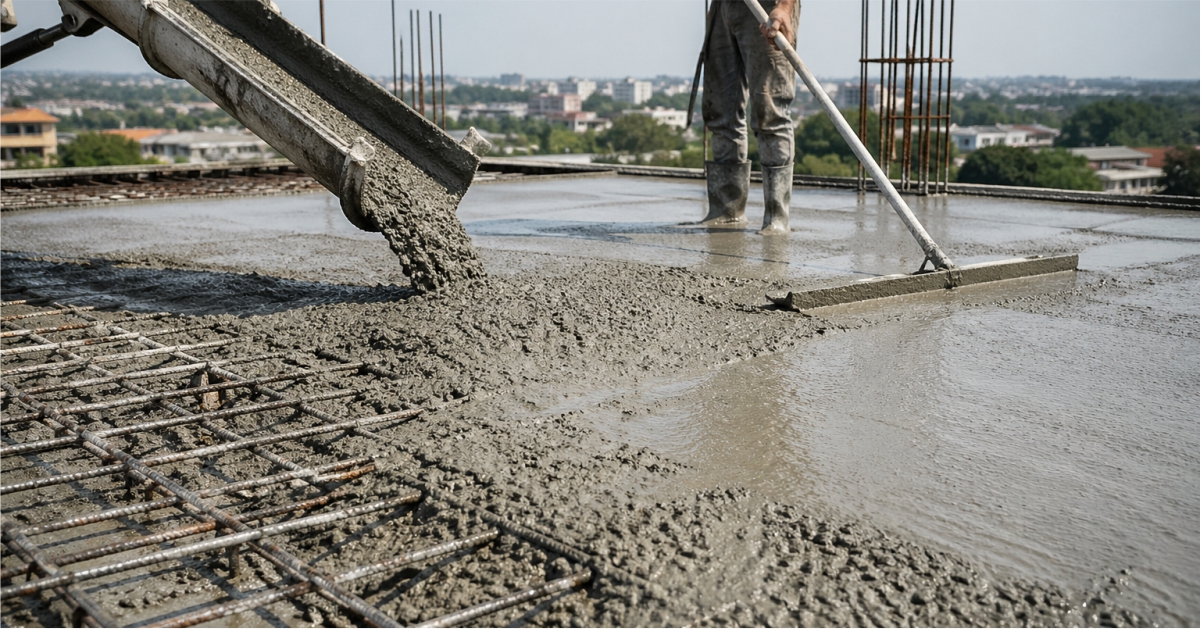
A roof slab does not just serve as a construction component, but also provides protection against monsoons, summer heat, and winter cold. You may consider it as the basic reason for a roof slab, but even the best cement for a roof slab is subjected to dead load, live load, and temperature changes each day. In case of using low-quality cement, this slab will result in damp spots and hairline cracks. However, high-quality cement provides the roof slab with an impermeable, water-resistant structure, thus protecting reinforcement from corrosion.
Cement is the silent hero of reinforced concrete roof slab construction.
Load-Bearing Strength and Crack Resistance: The Science Behind the Slab
Here’s where the science comes into play: how does roof slab cement actually resist cracks? The answer lies in hydration rates, curing precision, and thermal insulation for roof slabs. The recommendations of civil engineers for homeowners include choosing the right type of cement with proper curing, which eliminates the possibility of thermal cracks.
Thus, it is important not only to be focused on strength, but also to think ahead. Roof slab load calculation, the appropriate concrete mix ratio for roof slab, and slab durability enhancement techniques all converge to create a structure that defies time.
Recommended Types for Roof Slab Construction Cement
When you are considering options for the best cement for a roof slab, two products are consistently discussed by experts:
1. Portland Pozzolana Cement (PPC)
PPC contains fly ash, which delays the hydration process and minimises the possibility of cracking.
The fine texture makes PPC easier to use and a common choice for RCC roof waterproofing solutions.
PPC is the preferred choice where durability is key.
2. Ordinary Portland Cement (OPC) – Grade 53
OPC 53 cement for slab construction offers rapid strength development and is thus suitable for applications where time is a crucial factor.
However, if not cured properly, the slab may become brittle.
For projects that need quick completion, OPC is a preferred option.
Has this sparked your curiosity? Considering cement strength for slabs, do you prefer the durability offered by PPC or the urgency provided by OPC? Learn more about cement types that shape India’s construction landscape.
Navigating Technical Specifications: Thickness and Strength
The rules for determining the thickness of roof slabs go beyond mere figures; they are literally lifesavers. As per roof slab thickness guidelines for residential buildings, roof slabs must have a minimum thickness of 125mm to 150mm (5 to 6 inches). The grades of concrete used must include M20 or M25.
However, there is one secret ingredient that will make the roof slab construction cement even stronger: insulation. This ensures the slab can withstand deflection forces without fatigue.
Add thermal insulation for roof slabs, and you’ve unlocked another layer of resilience. Suddenly, your roof isn’t just a cover, it’s an engineered masterpiece.
Concrete Curing Methods for Slabs: The Unsung Ritual
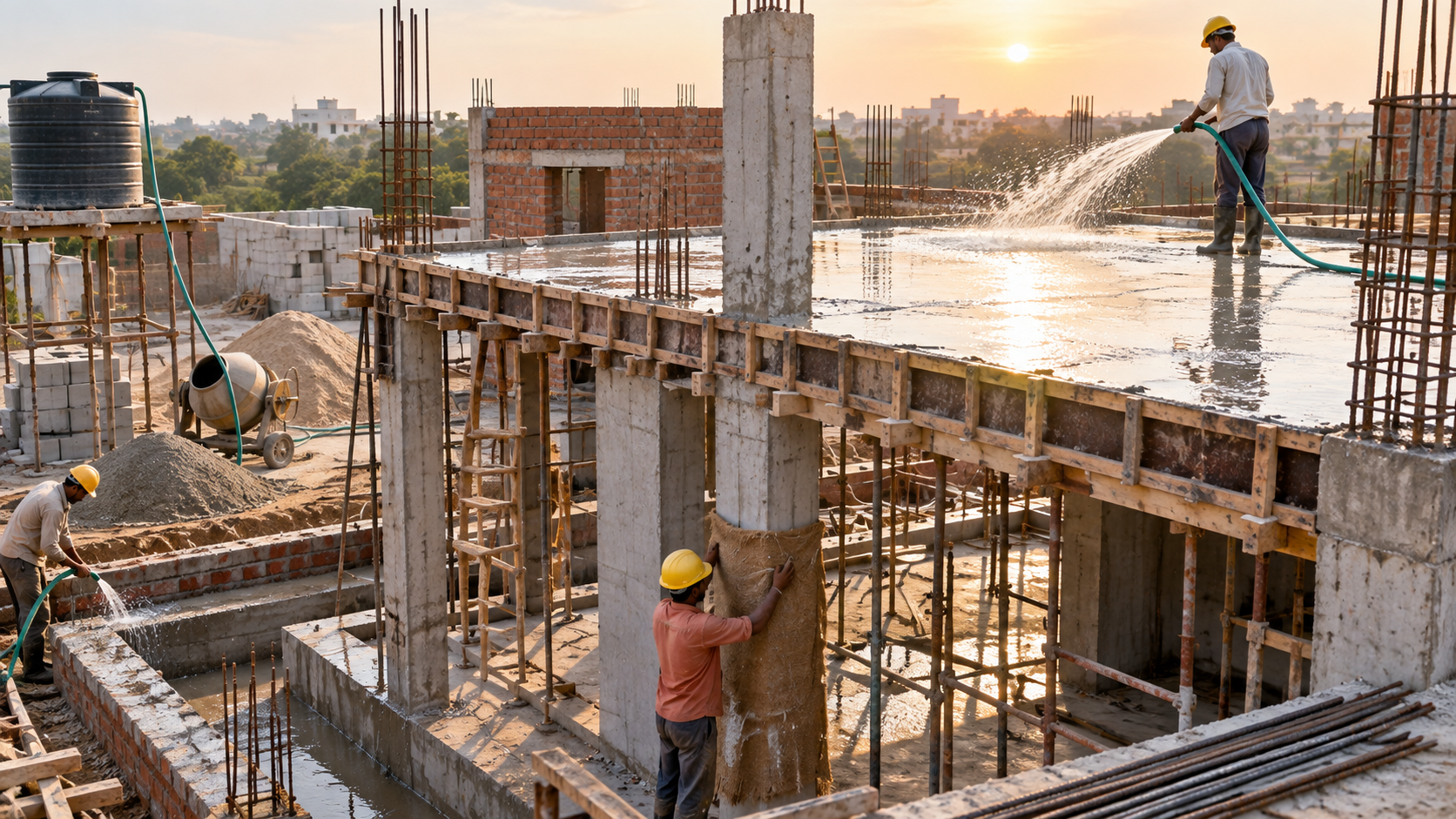
Concrete curing methods for slabs are critical yet often overlooked. Curing is what makes the cement realise its maximum capabilities. Incorrect curing results in weak slabs and cracks forming too soon. Using methods like wet curing, film curing, or any other form of curing compound ensures that the cement gets enough time to become strong.
Amongst slab durability enhancement techniques, think of curing as the maturation stage of your roof slab, silent and unnoticed, yet powerful.
Crack Prevention and Durability Enhancement
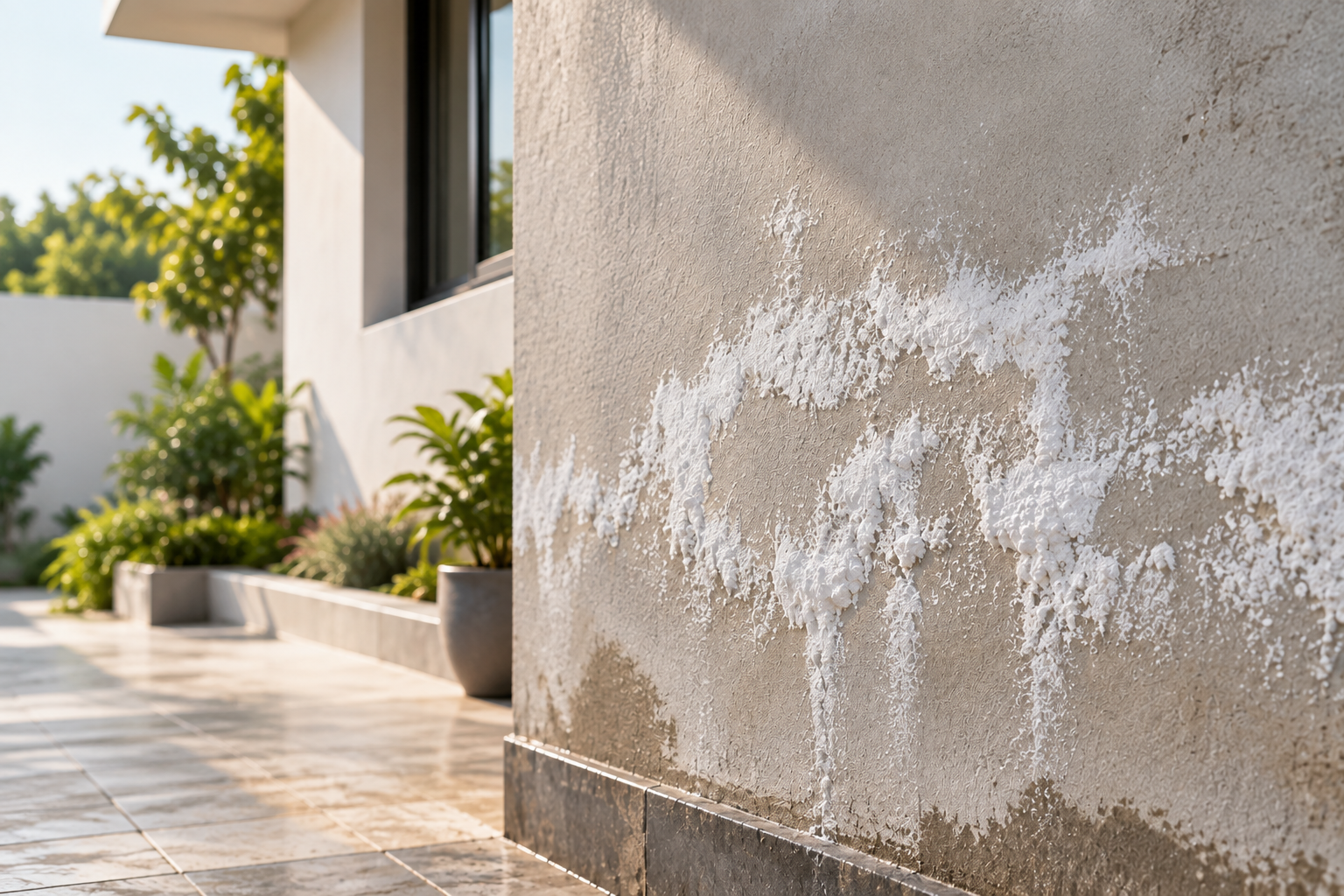
Cracks are the silent enemies of roof slabs. These cracks come about as a result of poor curing processes, wrong ratios in the mixing process, or the use of inferior-quality cement in the mixture. When you use the best cement for roof slab, it will automatically ensure crack prevention in concrete structures, from the simple expansion joints, all the way to admixtures. Some other methods of improving the longevity of your roof include using micro-silica and corrosion-resistant reinforcements. These aren’t just slab durability enhancement techniques; they’re the secrets that separate ordinary homes from timeless manifestations.
Selecting the Right Partners: Cement Suppliers
The best plans fall apart without a solid supply chain. Freshness of cement cannot be compromised; any exposure to water reduces its strength before reaching the mixing point. Selecting credible cement suppliers is just as important as choosing the right cement. A quality control checklist for building materials must incorporate supplier reliability, storage requirements, and delivery schedules. A construction materials quality checklist helps ensure effective tracking and quality control. After all, excellence begins long before the first pour.
One of the most crucial civil engineering tips for homeowners is that your roof slab is either your strongest ally or your weakest link.
The cement you choose, PPC or OPC?
The treatment you employ, waterproofing or curing?
The time you dedicate, crack prevention or shortcuts?
Every decision adds up.
Don’t settle for average; build a roof that challenges time itself. Because in construction, curiosity isn’t just about asking questions, it’s about demanding excellence!




 Back
Back