Best Cement for Foundation Work: How to Ensure Long-Lasting Structures?
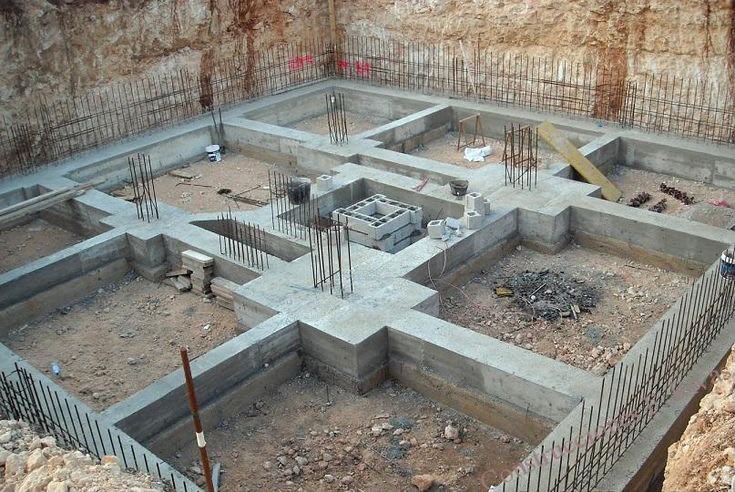
In building structures, the foundation plays an integral role. A well-designed, strong and resilient foundation will ensure that the load of the building is distributed safely on the soil making it last for many years. Therefore, choosing the right cement is of great importance in any construction project.
Why Foundations Need High-Quality Cement
Since the foundations are expected to carry the building’s entire load, if poor quality cement is used, it can lead to serious structural failures. A good quality foundation cement for construction assures:
Strength and Stability - Cements having high compressive strength, resist heavy loads over time.
Durability – Good quality cement ensures durability for many years.
Safety – Solid foundations prevent any cases of accidents.
Cost Efficiency – Cost efficiency in foundation work means that investing in a robust and well-engineered foundation upfront, prevents severe structural failures.
Choosing the most suitable cement is crucial because it directly determines the structure's resistance to underground moisture, aggressive soil salts (sulphates/chlorides), and load-bearing capacity. The ideal cement prevents chemical degradation and structural weakening over time.
Suitable Cement Types for Foundation
There are various types of cement, and many cement brands would claim to be the best. However, not all of them will be suitable in laying the foundation. Some of the cement types that you can consider include:
Ordinary Portland Cement (OPC): This cement is known for its strong and fast setting properties and is commonly used when constructing foundations.
Portland Pozzolana Cement (PPC): It has enhanced resistance against chemical and moisture effects; making it suitable for foundations in areas with groundwater exposure.
Heavy Duty Cement: Heavy duty cement is often considered to be the best choice for foundations. Its reliable performance ensures high compressive strength to bear the structure's weight, and high durability to resist underground moisture and chemicals. It safely transfers structural loads to the ground, preventing the building from sinking or collapsing. Heavy duty cement ensures maximum strength and durability.
In order to select the right cement for your building base, you must evaluate the soil conditions, structural load, and environmental exposure.
Best Practices for Strong Foundation
Proper cement selection alone does not guarantee the strength of your building. Some practices should be followed to have effective foundations.
Concrete Mix for Foundation - The best concrete mix for foundation work should be prepared in a 1:2:4 ratio (1-part cement: 2 parts sand: 4 parts gravel/aggregate), which corresponds to M15 to M20 concrete grades. This provides optimal compressive strength for standard residential and light commercial foundation requirements.
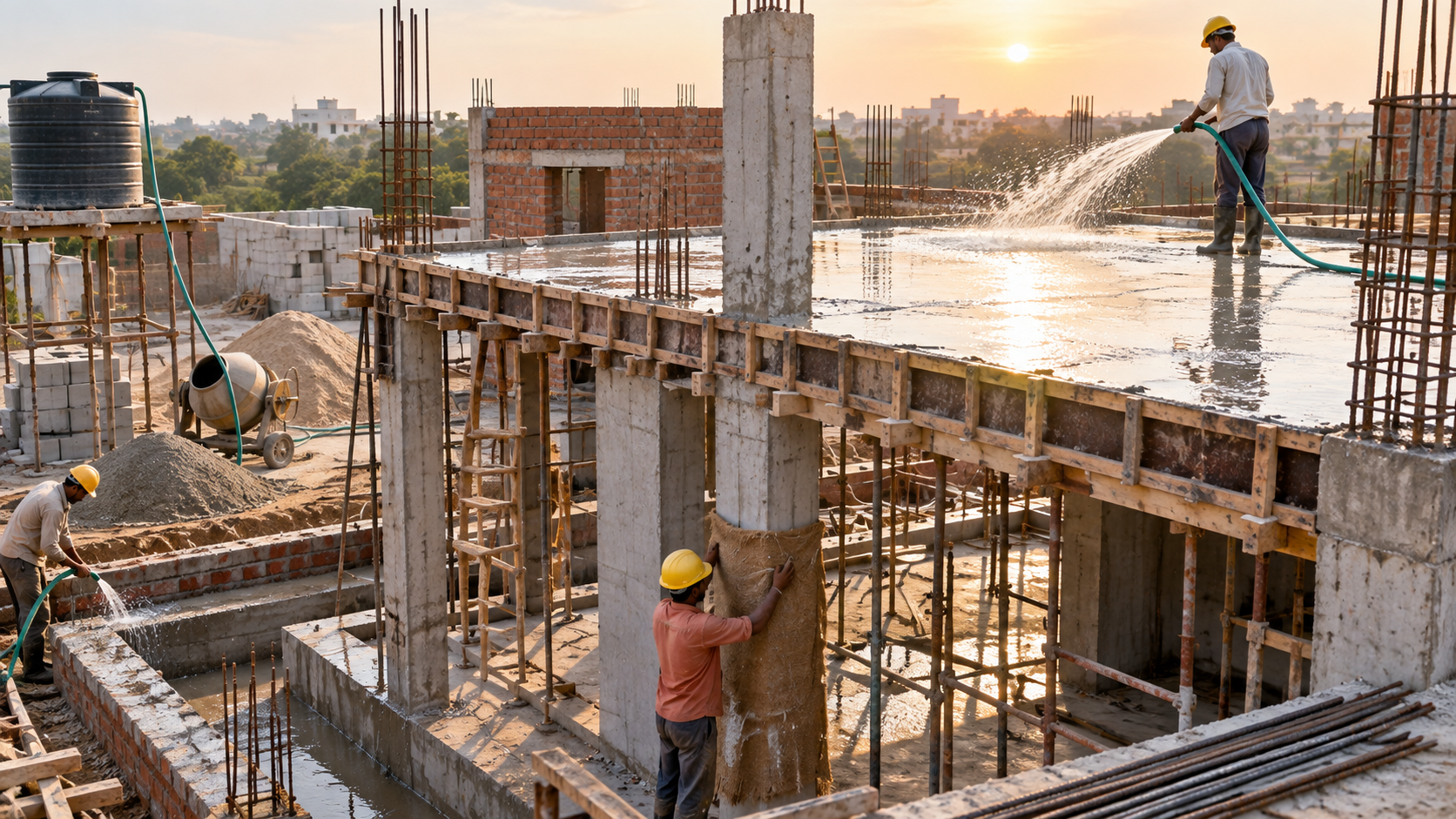
Cement Curing - Proper curing eliminates shrinkage cracks and protects the foundation from India’s harsh weather conditions.
Good Raw Material - Sand, stones, and pure water should be used during foundation construction as these materials directly affect the chemical bonding strength of cement.
Load Factor - Estimating the maximum loading bearing capacity of the cement (in other words, of the concrete made of cement) helps prevent the risk of structural collapse. This is of key importance as it is necessary to fully fortify the idea that the foundation can bear the total load.
Workmanship - Poor workmanship can render even the best cement to become useless. Whereas, proper workmanship can improve even an average quality cement. Cement forms the bedrock of the building during foundation work.
Role of Wall Materials in Reducing Foundation Load
The selection of wall material directly determines the load placed on the foundation. Using lightweight, yet strong materials coupled with the load bearing capacity helps reduce the load placed on the foundation.
For instance, wall materials such as fly ash AAC blocks are environmentally friendly, light and therefore, reduce the load on the foundation. The compatibility of cement with wall materials promotes structural integrity.
Cement for Footing and Base Work
The footings act as the connecting base between the foundation and the soil and an interactive platform. Using the appropriate cement when laying footings is very important. One needs to ensure uniform settlement of the footings.
Foundation Cement for Construction, The Cornerstone of Strength!
Every building relies on the foundation, which will determine the strength and durability of the building itself. But, in turn, any building foundation will necessarily start with its core element called cement, a crucial building material.
Of course, cement comes in different types and choosing the best cement for foundation work will involve a detailed analysis of several parameters of it, namely compressive strength, resistance to degradation, and safety. This will guarantee that the building foundation will be able to stand a lot of pressure and remain safe from the environment.
It can truly be said that the robustness of the foundation lies solely in the quality of the cement utilized in constructing it.
By using high-quality cement, coupled with sound construction techniques and careful selection of wall materials, the construction of foundations, which are not only robust, but also sustainable, can be achieved. Afterall, buildings are only as robust as the foundations upon which they stand.





 Back
Back